Learn how to model whole numbers visually using blocks and tables.
Defining a block notation
There are many ways to represent whole numbers visually, and one way we can do so is with blocks. We can use base-10 blocks to represent ones, tens, and hundreds as shown in the following figure:
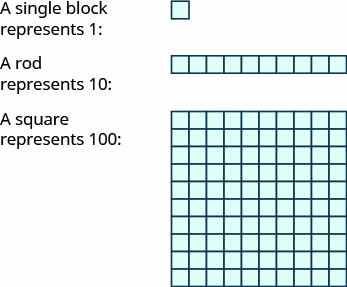
We may use the base-10 block notation shown in the image above where a:
- single block is 1,
- rod of ten single blocks is 10, and
- square of a hundred single blocks (or ten rods) is 100.
Modeling whole numbers using blocks
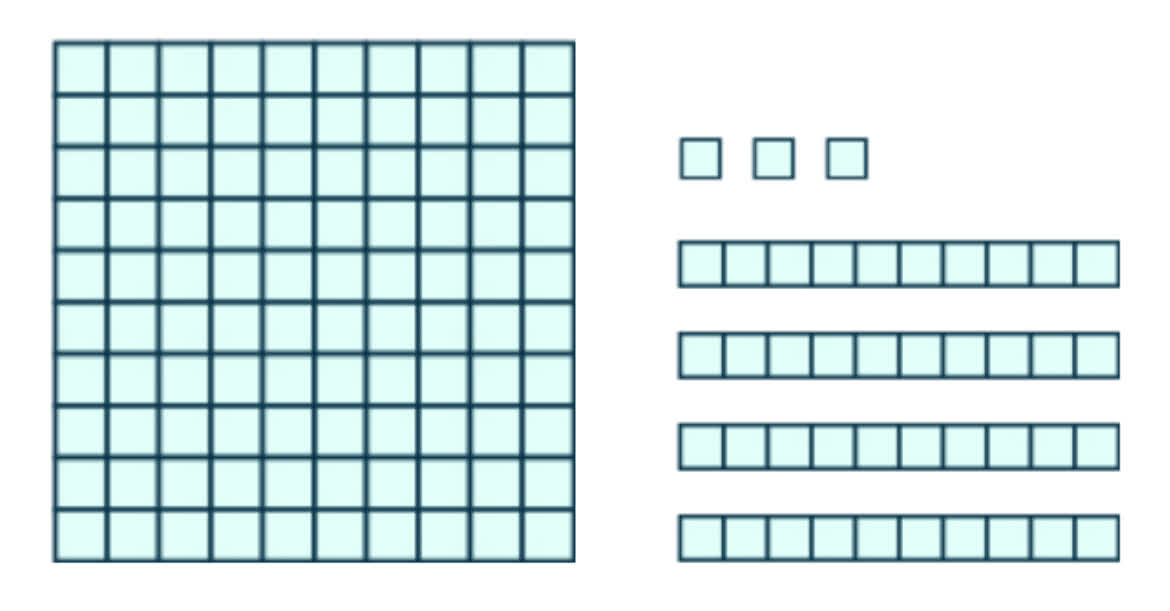
Consider the number 143. How can we represent it in base-10 block notation?
Since we’re using the place value system for our numbers, then we should recognize that the value of each digit in a number is associated with the position of that digit (or its place) within the number.
For example the 3 in 143 is in the ones place, the 4 is in the tens place, and the 1 is in the hundreds place. So we can show them visually as 3 single blocks, 4 rods, and 1 square.
Modeling whole numbers using tables
We can also model whole numbers with tables to help understand how they correlate with the place value system. Here’s how we can model 143 using a table:
| Digit | Place value | Number | Value | Total value |
|---|---|---|---|---|
| 1 | hundreds | 1 | 100 | 100 |
| 4 | tens | 4 | 10 | 40 |
| 3 | ones | 3 | 1 | +3 |
| Sum = 143 |
Practice problem
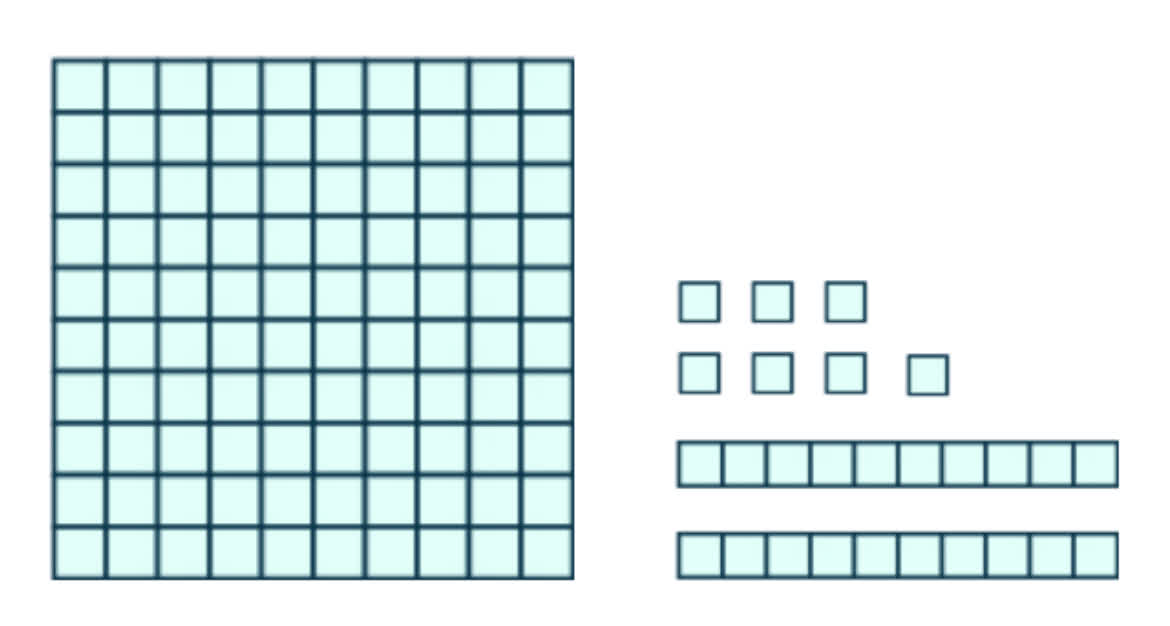
Model the number 127 in base-10 block notation and in a table.
Solution (click here to view)
Digit Place value Number Value Total value 1 hundreds 1 100 100 4 tens 4 10 40 3 ones 3 1 +3 Sum = 143
Here are some downloadable files based on this lesson:
Lesson content based on the “OpenStax Prealgebra 2e” textbook. Access for free at https://openstax.org/books/prealgebra-2e/pages/1-introduction.